
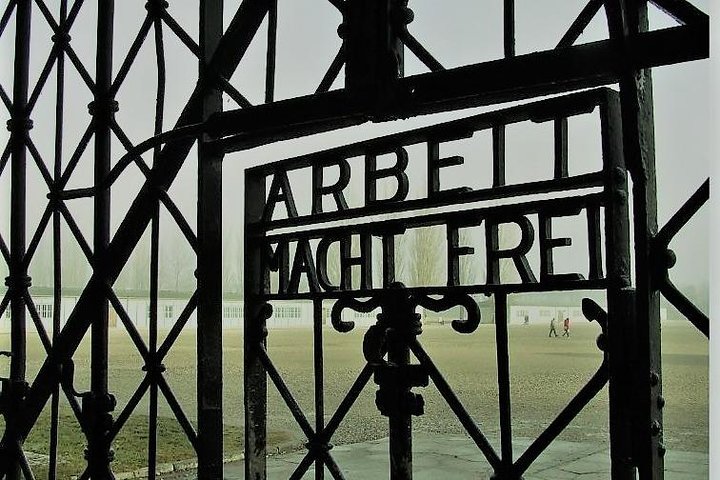


Munich and the Second World War
A World War II tour of Munich covers the city’s role from the rise of Nazism through the war years to liberation — the Nazi origins (the Beer Hall Putsch, the party headquarters), the resistance (the White Rose student movement at Ludwig Maximilian University, whose leaders were executed for distributing anti-Nazi leaflets), the wartime destruction (approximately 50% of Munich was destroyed by Allied bombing), and the post-war reconstruction. The tour typically combines Third Reich sites with WWII-specific locations — the bomb damage still visible on some buildings, the rebuilt Frauenkirche and Residenz, and the memorials to the resistance.
The White Rose Memorial at the university is the emotional centre — the story of Hans and Sophie Scholl and their fellow students, who distributed anti-Nazi leaflets knowing the likely consequence was death, is one of the most powerful resistance stories of the war.
Frequently Asked Questions
How is a WWII tour different from a Third Reich tour?
A Third Reich tour focuses on the Nazi movement’s origins in Munich (1919–1933). A WWII tour covers the broader wartime period (1939–1945) — the bombing, the resistance, the home front, and the liberation. There is overlap (the Nazi sites feature in both), but the WWII tour extends the timeline and the themes.
How long is a Munich WWII tour?
Typically 3–4 hours as a walking tour covering the city centre sites.